
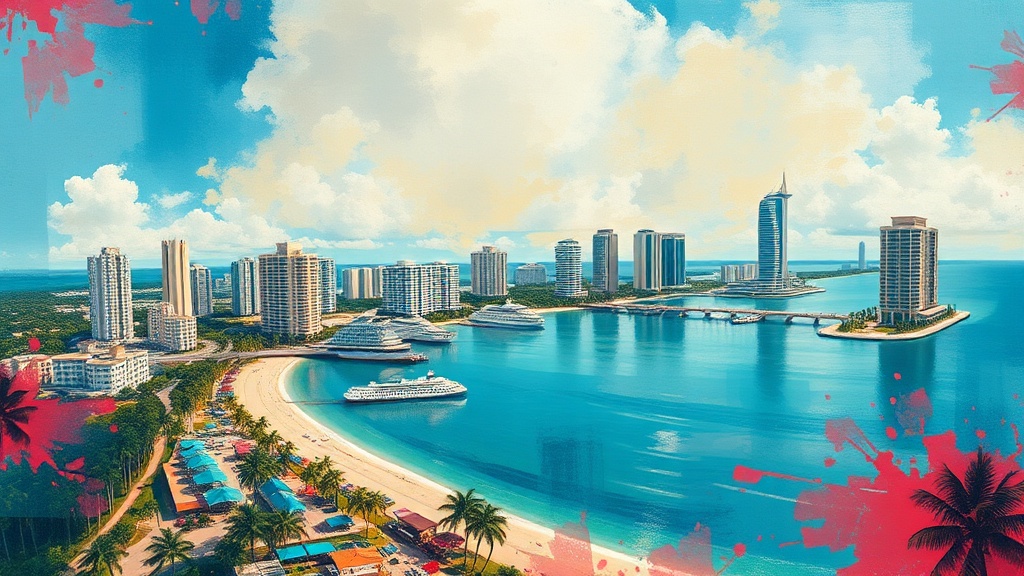
Miami’s waterfront is evolving into a model of urban reinvention — blending vibrant culture, booming tourism, and urgent climate resilience.
From the murals of Wynwood to the rhythms of Little Havana, Miami remains a global gateway while confronting the realities of a coastal future.
The city’s response is drawing attention for both innovative design and practical infrastructure.
Rising seas and more intense storms have reshaped planning priorities across Miami-Dade County.
Municipal leaders, developers, and community groups are investing in multi-layered strategies that go beyond seawalls. Expect to see elevated roadways and buildings, upgraded pump and stormwater systems, permeable pavements, and expanded green infrastructure that soaks up and stores rainwater. “Living shorelines” and restored mangroves are being prioritized where possible because they provide natural flood protection, improve water quality, and support habitat.
Real estate and development are adapting. New construction frequently incorporates elevated ground floors and mechanical systems placed above projected flood lines. Retrofit projects are increasingly common for older buildings, aiming to reduce risk while preserving neighborhood character. Neighborhoods once known primarily for seasonal tourism are becoming more year-round communities, offering remote-work amenities, co-working spaces, and transit connections that appeal to professionals who want a coastal lifestyle without sacrificing convenience.
Culture remains the city’s strongest differentiator. Wynwood continues to attract international street artists and galleries, transforming industrial warehouses into a walkable arts district.
Little Havana pulses with Cuban heritage — music venues, domino parks, and authentic eateries on bustling streets draw locals and visitors alike. The Design District blends high-end retail with public art and architecture, and Miami Beach’s nightlife and beachfront offer the leisure elements that keep the destination on many wish lists.
Transportation improvements are shaping how people move across the region. Miami International Airport continues to be a major hub for travel to Latin America and the Caribbean, while expanding regional rail and bus connections are making inter-city and intra-city trips easier.
Bike lanes, pedestrian-friendly streets, and initiatives to reduce congestion are part of a broader push for a more livable urban environment.
Culinary and hospitality sectors stay dynamic. Chefs are experimenting with Caribbean, Latin American, and global fusion flavors, supported by a lively local food scene and an emphasis on farm-to-table and seafood sustainability.
Boutique hotels emphasize design-forward interiors and immersive local experiences, while larger resorts keep investing in wellness and family-friendly amenities.
Community engagement is central to Miami’s resilience narrative. Neighborhood-level planning sessions, partnerships between civic groups and private developers, and targeted public investments aim to keep vulnerable communities informed and protected. Equity-focused approaches are helping ensure that adaptation measures benefit longtime residents as well as newer arrivals.
For visitors and residents alike, Miami offers a compelling mix: beaches and nightlife, rich cultural districts, and emerging green urbanism. The city’s trajectory demonstrates how coastal metropolises can balance growth with resilience — preserving the things that make Miami magnetic while preparing for a changing environment. Whether you’re drawn by art and cuisine or by the challenge of sustainable coastal living, Miami remains a city where innovation and lifestyle converge on the shoreline.
